Joules app iconJoules

Calorie Calculator

See how many calories you need each day to keep your weight steady, lose at a sensible pace, or gain.

Units
Sex

Count only regular activity. A desk job with a couple of workouts a week is Light.

Calories to maintain your weight
2,389kcal/day

16,723 kcal per week · BMR 1,737 kcal (Mifflin-St Jeor)

Daily calories by goal

GoalCalories/dayChange per week
Maintain weight2,3890
Lose 0.25 kg (0.5 lb) a week2,114−0.25 kg
Lose 0.5 kg (1 lb) a week1,839−0.5 kg
Lose 1 kg (2 lb) a week1,289−1 kg
Gain 0.25 kg (0.5 lb) a week2,664+0.25 kg
Gain 0.5 kg (1 lb) a week2,939+0.5 kg

Rates near 1 kg a week suit higher starting weights. Most people hold 0.25–0.5 kg a week far more easily.

Pick your goal row, then let Joules do the daily math — snap your meals and watch the day add up against your target.

Get Joules

What this calorie calculator tells you

Everything your body does costs energy, measured in calories. Eat about what you burn and your weight stays put. Eat less and your body draws on stored fat; eat more and it stores the extra. The calculator estimates your burn from age, sex, height, weight, and activity, then shows the intake for each goal: maintain, three rates of loss, and gain. One number does not fit everyone, and that is the point — a small, lightly active woman and a tall manual worker can sit 1,500 calories apart.

How many calories do you need a day?

Most adult women maintain on roughly 1,600–2,400 calories a day, most adult men on 2,000–3,000. The reference ranges below come from the Dietary Guidelines for Americans and span sedentary to active:

AgeWomenMen
19–301,800–2,4002,400–3,000
31–501,800–2,2002,200–3,000
51+1,600–2,2002,000–2,800

Treat these as population averages, useful for context and nothing else. Your height, weight, and actual week of movement matter more than your age bracket, which is why the calculator asks for all of them.

Calories to lose weight

Weight loss means eating below the maintain number. A cut of 250–500 calories a day produces about 0.25–0.5 kg (0.5–1 lb) per week, a pace most people can hold without misery. The 1 kg-per-week row requires a much larger cut; it fits higher starting weights and goes better with professional support. Two guardrails are built in: targets never drop below 1,200 calories, and nothing faster than 1 kg per week is offered. For deficit sizing, goal dates, and the honest math behind them, the calorie deficit calculator is the next step.

Calories to gain weight

Gaining works the same way in reverse: eat 250–500 above maintenance. Slower is leaner. A 250-calorie surplus adds roughly 0.25 kg a week, and paired with strength training more of that weight is muscle. To decide where the extra calories should come from, the macro calculator splits your target into protein, carb, and fat grams.

What a calorie change looks like in food

Numbers stick better when they are meals. A 250-calorie cut is one large latte and a biscuit, or a pint of beer, or two tablespoons of olive oil left out of the pan. A 500-calorie cut is a fast-food cheeseburger, a medium portion of fries, or swapping two sugary sodas for water. Going the other way, a 250-calorie surplus is a peanut butter sandwich, or a large banana with a glass of milk. No food here is forbidden on any plan. The point is that a daily target only moves when a few concrete choices move with it, and drinks and cooking fats are usually the cheapest places to start.

Where the numbers come from

The calculator estimates resting burn with the Mifflin-St Jeor equation, the formula clinical dietitians default to, then multiplies by an activity factor between 1.2 and 1.9. Resting burn on its own is the BMR calculator’s job, and the full method — equations, multiplier table, and a body-fat option — lives on the TDEE calculator page. Expect the result to land within about 10% of reality. The activity level you pick is the biggest source of error, so choose the lower one when torn.

Making your calorie target work

Eat to the same number every day rather than cycling it; consistency is what shows up on the scale. Weigh in the morning and judge weekly averages, since daily readings swing 1–2 kg on water alone. Count drinks, cooking oils, and sauces, because that is where most untracked calories hide. And rerun the calculator after every 4–5 kg of change: the target that loses weight at 90 kg merely maintains it at 80.
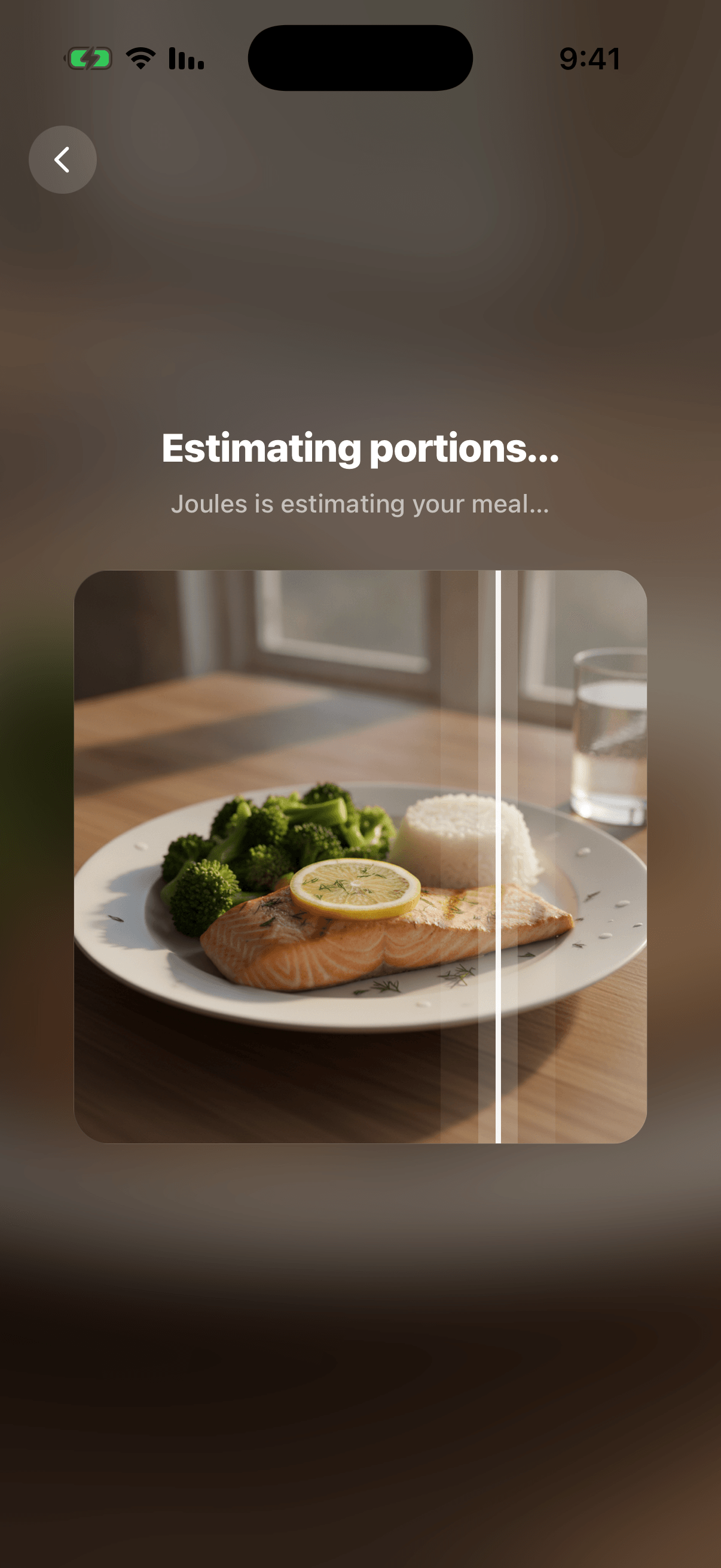
Joules AI food scan
The tracker built to be the most accurate

Everything MyFitnessPal, Cal AI and Noom do — in one calm app

Built for accuracy
  • AI reads your plate from a photo and fills in calories and macros
  • Numbers sourced from USDA FoodData Central, not crowd-sourced guesses
No paywall games
  • Barcode scanning is free — not locked behind a subscription
  • No ads, ever
One calm app, not three
  • Calorie and macro logging with a daily health score that explains itself
  • Intermittent fasting timer and weight tracking built in

Frequently asked questions

How many calories should I eat a day?

Most adult women maintain their weight on about 1,600–2,400 calories a day and most adult men on 2,000–3,000. Your personal number depends on size, age, and activity, which is what the calculator estimates from your details.

How many calories should I eat to lose weight?

Eat 250–500 calories below your maintenance number for a loss of about 0.25–0.5 kg (0.5–1 lb) per week. Bigger cuts move faster but are harder to keep up and cost more muscle. The calorie deficit calculator plans the whole thing, goal date included.

Is eating 1,200 calories a day safe?

It is the commonly cited floor for adults, and this calculator never goes under it. At 1,200 it is already difficult to cover protein, iron, calcium, and other needs, so intakes that low belong under the care of a doctor or registered dietitian.

Why do men need more calories than women?

On average men are taller, heavier, and carry more muscle, and muscle burns more energy than fat at rest. Per kilogram of lean mass the sexes are similar — a tall, muscular woman can easily need more calories than a small, sedentary man.

Do calorie needs change with age?

Yes, they drift down. Resting burn falls about 50 calories per decade, and most people also move less and lose muscle over time. Staying active and lifting weights cancels much of the drop, which is why the calculator asks for both age and activity.

Do all calories count the same?

For weight change, the total decides: 300 calories of chicken and 300 calories of cookies move the scale the same way. For hunger, muscle, and health they are far from equal — protein is the most filling per calorie, and whole foods make a calorie budget easier to live inside.

How accurate is a calorie calculator?

Estimates land within about 10% of measured values for most people, and the activity level you pick causes more error than the equation. Eat at the number for two to three weeks, watch your weekly-average weight, and adjust by 100–200 calories if the trend disagrees.

Related calculators

A note on accuracy: calculators like this one provide estimates based on population-level formulas — your real needs vary with genetics, muscle mass, medical conditions, and more. Results are for information only and are not medical advice, a diagnosis, or a prescription. Talk to a doctor or registered dietitian before making significant changes to your diet or exercise, especially if you have a health condition, are pregnant, or are under 18.