Joules app iconJoules

Heart Rate Zone Calculator

Turn your age and resting heart rate into five training zones in beats per minute, using the Karvonen method that accounts for your heart-rate reserve.

Measure resting heart rate before you get up in the morning. Leave max heart rate blank to estimate it from your age with the Tanaka formula.

Zone 2 heart rate (aerobic base)
136–149bpm

Karvonen method · max HR 187 bpm, resting 60 bpm

187 bpm
Max heart rate
127 bpm
Heart rate reserve

Your five training zones

Zone% of reserveHeart rate (bpm)
Zone 1 — very light5060%124136
Zone 2 — light (fat burn)6070%136149
Zone 3 — moderate (aerobic)7080%149162
Zone 4 — hard (threshold)8090%162174
Zone 5 — maximum90100%174187

Easy zones only pay off when your fuel supports them. Track meals in Joules to keep light days light and hard days properly fed.

Get Joules

What heart rate zones are

Heart rate zones split the range between rest and maximum into bands that each match a training purpose. Working in the right band keeps easy days easy and hard days hard, which is the balance most endurance plans are built around. Instead of guessing effort, you watch a number.

This calculator uses five zones, from very light recovery in Zone 1 up to near-maximum work in Zone 5. The bpm you see for each depends on both your maximum and your resting heart rate.

The Karvonen heart-rate-reserve method

Many charts set zones as a flat percentage of maximum heart rate. This tool uses the Karvonen method instead, described by Karvonen, Kentala, and Mustala in 1957. It works from your heart-rate reserve, which is maximum heart rate minus resting heart rate:

Because the resting rate feeds into every zone, two people with the same maximum but different resting rates get different targets. The maximum itself comes from the Tanaka formula, 208 − 0.7 × age (Tanaka, Monahan, and Seals, 2001), unless you enter a measured value.

The five training zones

The table below lists each zone as a share of heart-rate reserve. The bpm ranges in the calculator above are these percentages applied to your own numbers.

Zone% of reserveFeels like
Zone 1 — very light50 – 60%Recovery, easy to chat
Zone 2 — light60 – 70%Aerobic base, conversational
Zone 3 — moderate70 – 80%Steady, talking gets harder
Zone 4 — hard80 – 90%Threshold, short phrases only
Zone 5 — maximum90 – 100%Near all-out intervals

Using zones in training

A common pattern is to spend most of the week in Zones 1 and 2, add some Zone 3 to 4 work, and keep Zone 5 for short intervals. Recalculate your zones whenever your resting heart rate shifts, since a fitter heart usually rests slower. For the ceiling behind these numbers, see the max heart rate calculator, and to gauge aerobic fitness try the VO2 max calculator. To match a session with fuel, the running calorie calculator estimates what a run costs in calories.
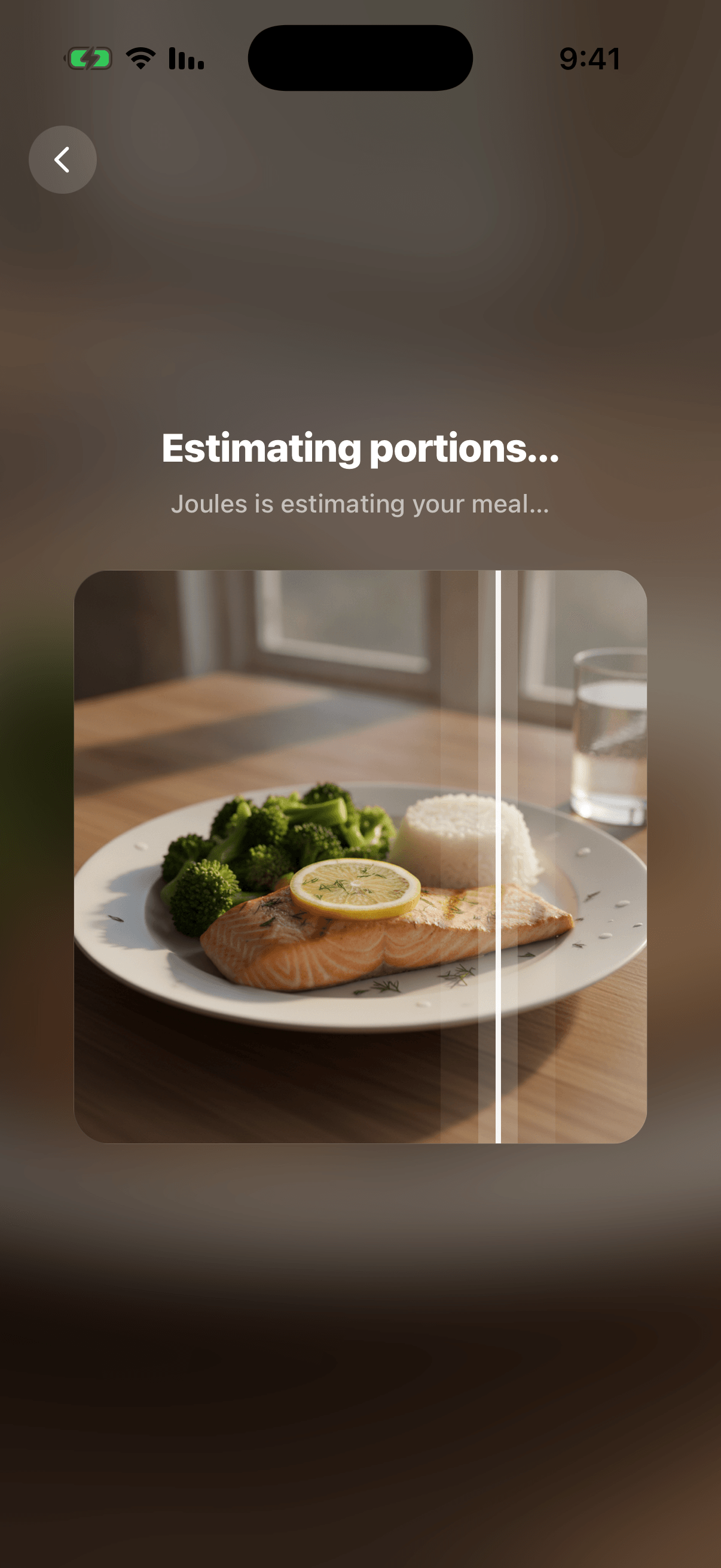
Joules AI food scan
The tracker built to be the most accurate

Everything MyFitnessPal, Cal AI and Noom do — in one calm app

Built for accuracy
  • AI reads your plate from a photo and fills in calories and macros
  • Numbers sourced from USDA FoodData Central, not crowd-sourced guesses
No paywall games
  • Barcode scanning is free — not locked behind a subscription
  • No ads, ever
One calm app, not three
  • Calorie and macro logging with a daily health score that explains itself
  • Intermittent fasting timer and weight tracking built in

Frequently asked questions

What are the five heart rate zones?

They run from very light to maximum effort. Zone 1 is recovery, Zone 2 is easy aerobic base work, Zone 3 is steady moderate effort, Zone 4 is hard threshold work, and Zone 5 is near-maximum intervals. Each zone trains a slightly different part of your fitness, and most weeks lean heavily on Zones 1 and 2.

What is the Karvonen method?

It sets zones from your heart-rate reserve, the gap between your maximum and resting heart rate, rather than from maximum alone. The target for an intensity is resting heart rate plus that share of the reserve. Because it includes your resting rate, it gives more personal ranges than a flat percentage of maximum.

How do I measure my resting heart rate?

Measure it first thing in the morning, before you get out of bed. Count your pulse for 60 seconds, or read it from a watch worn overnight. Take it across a few days and average the readings, since stress, caffeine, and poor sleep all push it up. A typical adult resting heart rate sits between 60 and 80 bpm.

What is Zone 2 training?

Zone 2 is easy aerobic work at roughly 60 to 70 percent of your heart-rate reserve, a pace where you can still hold a conversation. It builds the aerobic base that endurance rests on, and many coaches suggest spending most training time there. This calculator shows your Zone 2 range as the headline number.

Do I need a chest strap or is a wrist watch enough?

A chest strap reads the heart’s electrical signal and is more accurate during hard or fast-changing efforts, where wrist optical sensors can lag. For easy and steady sessions a good wrist monitor is usually close enough. If you train by zones seriously, especially at threshold and above, a chest strap is worth it.

How accurate are these heart rate zones?

They are only as good as the two numbers behind them. Maximum heart rate is estimated from your age unless you enter a measured value, and that estimate can be off by 10 to 12 bpm. The zones are a solid starting point, but fine-tune them against how efforts feel and against a lab or field test if you have one.

Related calculators

A note on accuracy: calculators like this one provide estimates based on population-level formulas — your real needs vary with genetics, muscle mass, medical conditions, and more. Results are for information only and are not medical advice, a diagnosis, or a prescription. Talk to a doctor or registered dietitian before making significant changes to your diet or exercise, especially if you have a health condition, are pregnant, or are under 18.