Joules app iconJoules

Running Calorie Calculator

Find how many calories you burn on a run from your distance and body weight — with an honest take on how little pace changes the total.

Units
Calories burned running
386kcal

3 mi · about 30 min · roughly 13.2 kcal per minute

129 kcal
Per mi
19%
Of a 2,000-kcal day

The total energy to cover a distance barely changes with pace — running economy is close to 1 kcal per kg per km whether you jog or race. Pace changes how fast you burn it, not the total for the distance.

A 400-kcal run is easy to eat back. Log your meals in Joules and see whether the day still nets out where you want it.

Get Joules

How this running calorie calculator works

The estimate rests on a well-established figure from exercise physiology: the energy cost of running is close to 1.036 calories per kilogram of body weight per kilometre, and it barely changes with pace on level ground. So the total for a run is essentially your weight times the distance:

A 77 kg (170 lb) runner covering 5 km burns about 400 calories whether that takes 25 minutes or 35. The pace you choose changes the estimated duration and the per-minute burn rate — the calculator shows both — but not the total for the distance. This comes from the Compendium of Physical Activities and classic running-economy research by Margaria and colleagues.

Why pace hardly matters for the total

It surprises people, so it is worth spelling out. Running a kilometre moves your body mass a fixed distance against gravity and ground friction. Doing it faster raises the power output per second, but you finish sooner, and the two effects roughly cancel. The result is that total energy per kilometre is close to constant across normal running speeds.

Walking is different: it is far more economical than running, so a walked mile burns less than a run mile. Once you are actually running, though, the pace mostly decides how long the run takes, not how much it costs.

What changes the number

Running for weight loss

Running is excellent for fitness and a useful part of a fat-loss plan, but the arithmetic is humbling: a pound of fat is about 3,500 calories, or roughly 30 to 35 miles of running for most people. That is why diet does the heavy lifting. Set a sensible target with the calorie calculator or plan a rate with the calorie deficit calculator, then let running add to the deficit rather than carry it. And be honest about eating back the burn — exercise estimates run high, and a single recovery snack can erase a whole run.
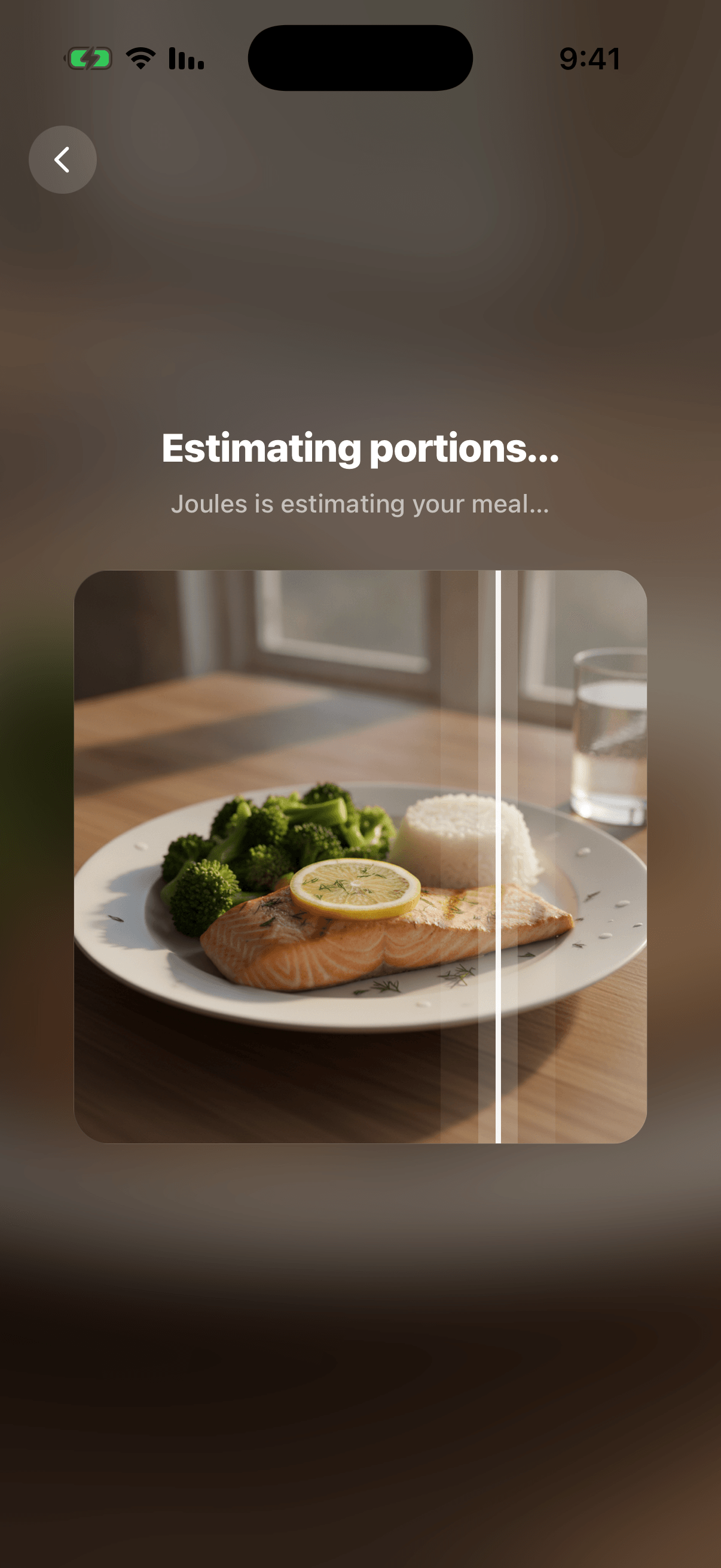
Joules AI food scan
The tracker built to be the most accurate

Everything MyFitnessPal, Cal AI and Noom do — in one calm app

Built for accuracy
  • AI reads your plate from a photo and fills in calories and macros
  • Numbers sourced from USDA FoodData Central, not crowd-sourced guesses
No paywall games
  • Barcode scanning is free — not locked behind a subscription
  • No ads, ever
One calm app, not three
  • Calorie and macro logging with a daily health score that explains itself
  • Intermittent fasting timer and weight tracking built in

Frequently asked questions

How many calories does running burn?

A useful rule of thumb is about 1 calorie per kilogram of body weight per kilometre, or roughly 100 calories per mile for a 70 kg (154 lb) runner. Heavier runners burn more because they move more mass. Distance and body weight drive the total far more than speed.

Does running faster burn more calories?

Over the same distance, barely. Running economy is close to 1 calorie per kilogram per kilometre whether you jog or race, so a 5 km run burns about the same total either way. Faster running just packs those calories into less time — the per-minute rate rises, the total for the distance stays nearly fixed.

How accurate is a running calorie calculator?

The distance-based estimate is reliable for flat road running, usually within about 10–15 percent. Hills, wind, soft ground, and individual economy shift it. For an incline workout, the treadmill calorie calculator accounts for grade. Treat any figure as a solid estimate, not a precise count.

Should I subtract calories burned running from my daily intake?

Be careful. Exercise estimates tend to run high, and it is easy to eat back more than you burned. Setting a target with the calorie calculator and mostly ignoring exercise burn is the more reliable approach — treat any extra as a small bonus, not licence to eat more.

Does running on a treadmill burn the same as outside?

On the flat, a treadmill is slightly easier than outdoors — no air resistance, and the belt helps. A 1 percent incline roughly matches outdoor effort, and anything steeper burns more. The treadmill calorie calculator handles grade directly.

How many calories to lose a pound of fat by running?

A pound of fat holds roughly 3,500 calories, so burning that much takes most runners around 30–35 miles. Running works best paired with diet, not on its own — the calorie deficit calculator shows how the two add up.

Related calculators

A note on accuracy: calculators like this one provide estimates based on population-level formulas — your real needs vary with genetics, muscle mass, medical conditions, and more. Results are for information only and are not medical advice, a diagnosis, or a prescription. Talk to a doctor or registered dietitian before making significant changes to your diet or exercise, especially if you have a health condition, are pregnant, or are under 18.