Joules app iconJoules

Weight Gain Calculator

Find the daily calories to gain weight at a rate you choose. The calculator estimates what you burn, adds a surplus, and shows a protein target to keep more of the gain as muscle.

Unidades
Sexo

¿No estás seguro? La mayoría lo sobreestima — elige un nivel más bajo.

Target gain rate
Daily calories to gain weight
2540kcal/day

Maintenance (TDEE) 2265 kcal · +275 kcal surplus · about 0.25 kg/week

Compare gain rates

RateCalories / dayWeekly gain
Lean gain (your pick)2540+0.25 kg/wk
Faster gain2815+0.5 kg/wk

Aim for around 122 g of protein a day to steer the surplus toward muscle. A larger surplus adds weight faster, but more of it arrives as fat, so the lean rate is the safer default.

A surplus only works if you hit it most days. Log meals in Joules and it keeps you a few hundred calories above maintenance without guesswork.

Descarga Joules

How much to eat to gain weight

Gaining weight comes down to one rule: eat more calories than you burn. Your body spends a certain amount each day to stay alive and move around, called total daily energy expenditure, or TDEE. Eat above that figure and the extra energy is stored, some as muscle and some as fat. The gap between what you burn and what you eat is the surplus.

This calculator estimates your TDEE from your height, weight, age, sex, and activity, then adds a surplus sized to your chosen gain rate. The TDEE calculator shows the maintenance figure on its own if you want to see it first.

Choosing a gain rate

The surplus rests on a well-worn proxy: about 7,700 calories per kilogram of body tissue, close to 3,500 per pound. Spread across a week, that sets the daily surplus for a target rate.

Gain rateDaily surplusWeekly gain
Lean gainAbout 275 kcal0.25 kg (0.5 lb)
Faster gainAbout 550 kcal0.5 kg (1 lb)

A smaller surplus of roughly 250 to 300 calories, giving about a quarter kilo a week, puts the most of the gain into muscle and the least into fat. A larger surplus fills the scale faster, but the part beyond what muscle can use is stored as fat. Unless you are very underweight, the leaner rate is the one worth defaulting to.

Protein and training decide the result

A surplus sets how fast the scale moves. Protein and resistance training set how much of that gain is muscle rather than fat. Aim for roughly 1.6 to 2.2 grams of protein per kilogram of body weight a day, and train the major muscle groups with progressive overload. The protein calculator sets the grams, and the macro calculator divides your gain calories across protein, carbs, and fat.

The mirror of a calorie deficit

Gaining and losing weight run on the same equation from opposite directions. A surplus above maintenance builds weight; a deficit below it takes weight off. Both lean on the same 7,700 calories per kilogram figure, so the sums look familiar either way. If your goal flips, the calorie deficit calculator runs the losing side with the same logic.

Whichever way you go, judge it by the trend on the scale over two to three weeks rather than any single day. Water, food weight, and normal swings hide the real change until you average them out. Adjust the surplus by 100 to 150 calories once the weekly average tells you whether you are on track. These figures are estimates, not medical advice; a doctor or dietitian can help if you are underweight or gaining for a health reason.

Joules AI food scan
El rastreador creado para ser el más preciso

Todo lo que hacen MyFitnessPal, Cal AI y Noom — en una sola app tranquila

Diseñado para la precisión
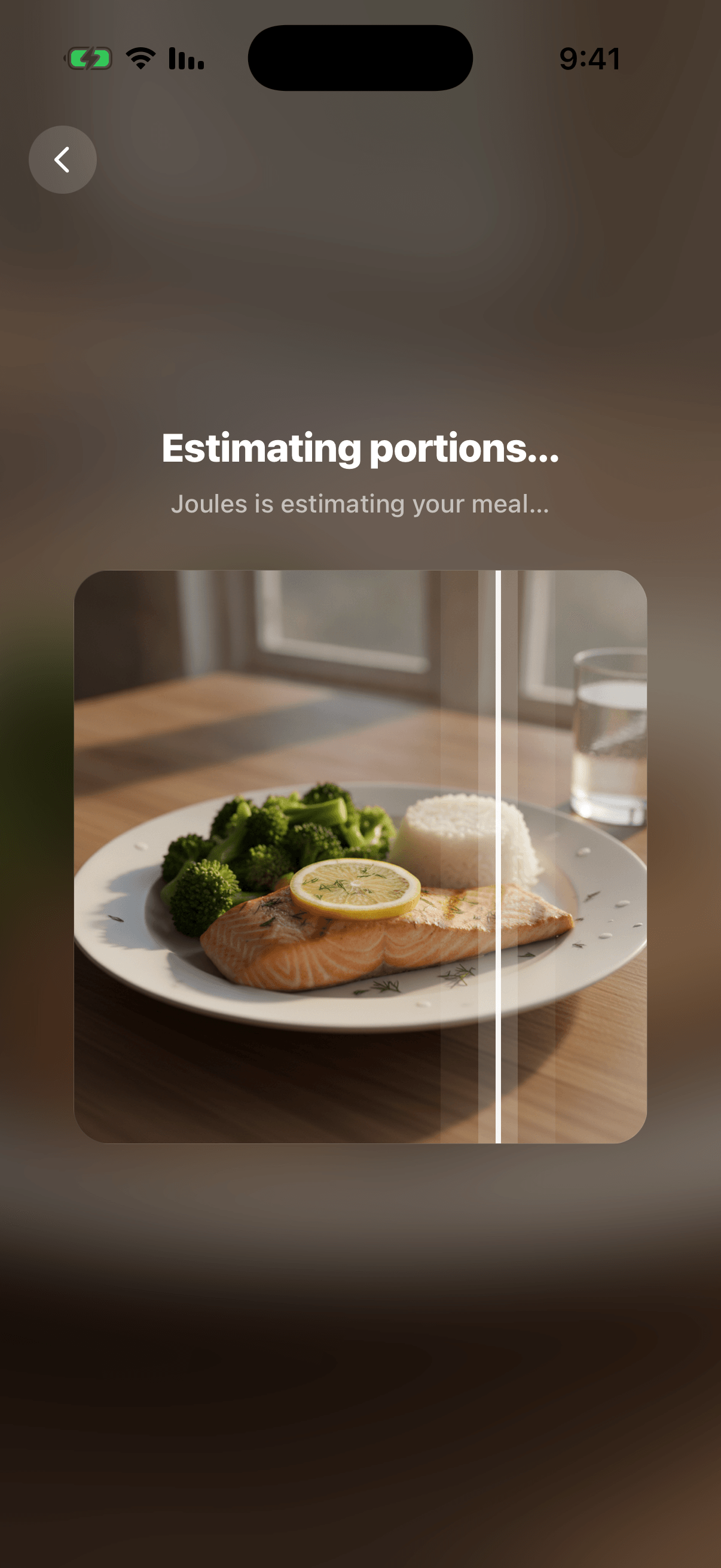
  • La IA lee tu plato desde una foto y completa las calorías y los macros
  • Cifras tomadas de USDA FoodData Central, no de conjeturas de usuarios
Sin juegos de muro de pago
  • El escaneo de códigos de barras es gratis — no está bloqueado tras una suscripción
  • Sin anuncios, nunca
Una sola app tranquila, no tres
  • Registro de calorías y macros con una puntuación de salud diaria que se explica sola
  • Temporizador de ayuno intermitente y seguimiento del peso integrados

Preguntas frecuentes

How many calories should I eat to gain weight?

Start from the calories you burn in a day (your TDEE) and add a surplus. Gaining about 0.25 kg or half a pound a week needs roughly 250 to 300 extra calories a day. Doubling that to 0.5 kg or one pound a week needs about 500 to 550 extra. The calculator works out both from your details.

What is a good rate of weight gain?

For most people after muscle rather than fat, about 0.25 to 0.5 kg (0.5 to 1 pound) a week is sensible. Slower gain at the lower end keeps more of the added weight as muscle. Faster gain reaches the scale sooner, but a larger share of it is fat.

How much protein do I need to gain muscle?

Around 1.6 to 2.2 grams of protein per kilogram of body weight a day supports muscle growth. This calculator suggests roughly 1.8 g/kg. Spreading it across meals helps. The protein calculator sets a precise daily target.

Why am I not gaining weight?

Almost always the surplus is smaller than it looks. Appetite, an active day, or under-counting portions can erase a few hundred calories without you noticing. If the scale has not moved in two to three weeks, add about 150 calories a day and check again.

Is a bigger surplus faster?

It adds scale weight faster, not muscle faster. Muscle has a ceiling on how quickly it can be built, so calories beyond a moderate surplus mostly become fat. A larger surplus suits someone who is very underweight or struggles to eat enough.

How does weight gain compare to a calorie deficit?

They are mirror images. A deficit sits below your maintenance calories to lose weight; a surplus sits above it to gain. Both use the same rough figure of 7,700 calories per kilogram of body tissue. The calorie deficit calculator handles the losing side.

Should I track macros while gaining?

It helps. Hitting a protein target protects how much of the gain is muscle, and keeping carbs reasonable fuels training. The macro calculator splits your gain calories into grams of protein, carbs, and fat.

Calculadoras relacionadas

Una nota sobre la precisión: las calculadoras como esta dan estimaciones basadas en fórmulas poblacionales — tus necesidades reales varían según la genética, la masa muscular, las condiciones médicas y más. Los resultados son solo informativos y no constituyen consejo médico, diagnóstico ni prescripción. Habla con un médico o con un nutricionista certificado antes de hacer cambios importantes en tu dieta o ejercicio, sobre todo si tienes una condición de salud, estás embarazada o eres menor de 18 años.