Joules app iconJoules

Kilojoules to Calories Converter

Convert food energy between kilojoules and kilocalories in either direction. One kcal equals 4.184 kJ.

Direction
2,000 kJ equals
478kcal

1 kcal = 4.184 kJ

Quick reference

KilojoulesKilocalories
100 kJ24 kcal
500 kJ120 kcal
1,000 kJ239 kcal
2,000 kJ478 kcal
5,000 kJ1,195 kcal
8,700 kJ2,079 kcal

8,700 kJ (2,079 kcal) is the average daily intake benchmark printed on Australian food labels.

Skip the label math — Joules logs food in kilojoules or kilocalories and converts between them for you.

Descarga Joules

Why food labels differ by country

The joule is the international (SI) unit of energy, so several food systems adopted it. Australia and New Zealand print kilojoules only. The EU and UK print both kJ and kcal on every label. The US and Canada stayed with "Calories". The energy in the food is identical; only the ruler changes, which is why a muesli bar reads 800 kJ in Sydney and 191 kcal in New York.

A food Calorie is a kilocalorie

The calorie that chemists defined is tiny — the energy to warm one gram of water by one degree Celsius. Food energy is measured in thousands of them, so every "Calorie" on a label or menu is actually a kilocalorie. Apps, labels, and this site all follow that convention: calorie means kcal.

The 4.184 factor

One kilocalorie equals 4.184 kilojoules, the thermochemical definition. So the conversion runs both ways with one number: kJ ÷ 4.184 = kcal, and kcal × 4.184 = kJ. For mental math, dividing kilojoules by 4 gets within about 4%.

The reference table above includes 8,700 kJ because Australian labels use it as the average adult's daily intake benchmark — 2,079 kcal, sitting close to the 2,000-kcal convention on US labels. Both are population averages rather than personal targets. Your own maintenance number comes from your size and activity, which is what the TDEE calculator estimates, and the calorie calculator turns into eating targets.

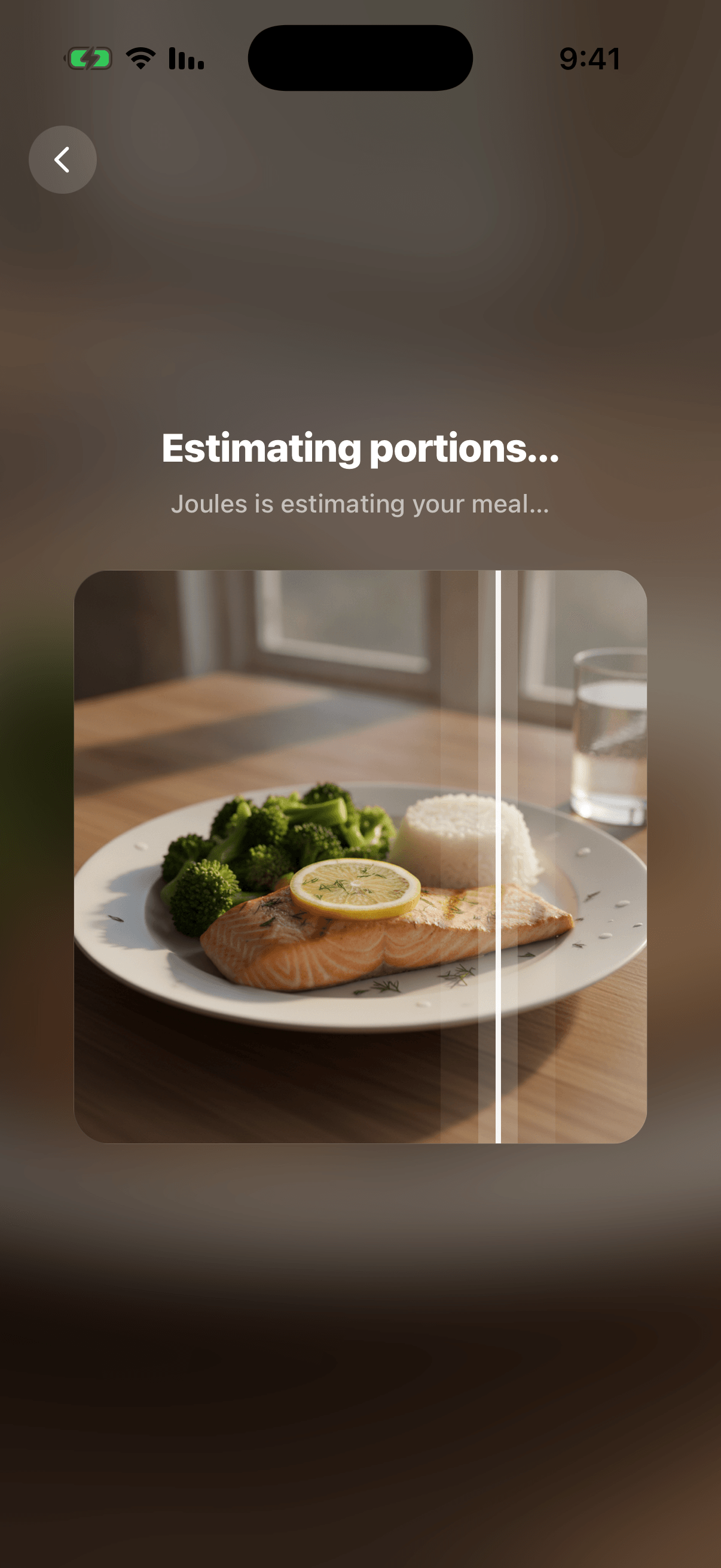
Joules AI food scan
El rastreador creado para ser el más preciso

Todo lo que hacen MyFitnessPal, Cal AI y Noom — en una sola app tranquila

Diseñado para la precisión
  • La IA lee tu plato desde una foto y completa las calorías y los macros
  • Cifras tomadas de USDA FoodData Central, no de conjeturas de usuarios
Sin juegos de muro de pago
  • El escaneo de códigos de barras es gratis — no está bloqueado tras una suscripción
  • Sin anuncios, nunca
Una sola app tranquila, no tres
  • Registro de calorías y macros con una puntuación de salud diaria que se explica sola
  • Temporizador de ayuno intermitente y seguimiento del peso integrados

Preguntas frecuentes

How many calories is 1,000 kJ?

1,000 kJ is 239 kcal. Divide any kilojoule figure by 4.184 to get kilocalories. Going the other way, 1,000 kcal is 4,184 kJ.

Why does Australia use kilojoules instead of calories?

The joule is the official SI unit of energy, and Australian and New Zealand food law (the FSANZ code) requires energy on labels in kilojoules. The EU shows both kJ and kcal. The US kept the kilocalorie, printed as "Calories". Same energy, different national conventions.

Are calories and kilocalories the same thing?

On food labels and in apps, yes. A food "Calorie" is one kilocalorie — 1,000 of the small calories chemists use. Every calorie count you see on a menu, a label, or a tracking app means kcal.

What is 8,700 kJ in calories?

8,700 kJ is 2,079 kcal. It is the reference daily intake for an average Australian adult — the local equivalent of the 2,000-calorie day on US labels. Your personal number depends on your size and activity; the TDEE calculator works it out.

How do I convert kJ to calories in my head?

Divide by 4. It overstates by about 4% — close enough for a supermarket aisle. A 2,000 kJ snack is roughly 500 kcal by the shortcut, 478 exactly.

Calculadoras relacionadas

Una nota sobre la precisión: las calculadoras como esta dan estimaciones basadas en fórmulas poblacionales — tus necesidades reales varían según la genética, la masa muscular, las condiciones médicas y más. Los resultados son solo informativos y no constituyen consejo médico, diagnóstico ni prescripción. Habla con un médico o con un nutricionista certificado antes de hacer cambios importantes en tu dieta o ejercicio, sobre todo si tienes una condición de salud, estás embarazada o eres menor de 18 años.