Joules app iconJoules

Body Fat Calculator

Estimate your body fat percentage with the U.S. Navy tape method — a few circumference measurements, no special equipment, and a result you can repeat every month.

الوحدات
الجنس

Measure the waist at the navel (men) or the narrowest point (women), with the tape snug but not pressed into the skin.

Estimated body fat
17.2%

Average · U.S. Navy circumference method

13.2 kg
Fat mass
63.8 kg
Lean mass

Body fat categories (ACE)

CategoryMenWomen
Essential fat2–5%10–13%
Athletes6–13%14–20%
Fitness14–17%21–24%
Average (your result)18–24%25–31%
Obese25%+32%+

Log your food in Joules alongside monthly tape measurements and you can watch lean mass hold steady while the fat number moves.

احصل على Joules

How the Navy tape method works

The method comes from the Naval Health Research Center, where Hodgdon and Beckett published it in 1984 as a way to screen thousands of sailors without lab equipment. It predicts body density from circumference measurements, then converts density to a fat percentage. For men the inputs are waist, neck, and height; for women, waist, hips, neck, and height.

The logic is simple: the waist (and hips) grow with fat mass, the neck tracks lean mass, and height anchors the proportions. Subtracting neck from waist strips some of the frame-size effect out, which is why a thick-necked lifter and a slim-necked runner with the same waist get different results. The formula runs on logarithms of the measurements, so small tape errors matter more at lean extremes than in the middle.

How to measure yourself correctly

Measurement quality decides result quality. Use a flexible, non-stretch tape, keep it level with the floor, and let it sit snug against the skin without compressing it. Take each measurement two or three times and average.

Neck

Measure just below the larynx (the Adam's apple), with the tape sloping slightly downward toward the front. Look straight ahead and relax your shoulders. Do not flare your neck or tuck your chin.

Waist

Men measure at navel level; women at the narrowest visible point of the torso. Measure at the end of a normal exhale, arms at your sides. Do not suck in. This is the input the result is most sensitive to, so honesty here pays off.

Hips

Women only: measure around the widest point of the hips and glutes, feet together, viewed from the side. Keep the tape level all the way around.

How accurate is it?

Validation studies put the standard error around 3–4 percentage points against underwater weighing and DEXA. A reading of 22% means the lab answer most likely falls between about 18% and 26%. That sounds wide, and for a one-off snapshot it is. The method earns its keep in tracking: because the error is mostly consistent for a given body, month-to-month changes are far more trustworthy than the absolute number. Very lean athletes and people with unusual fat distribution see the largest misses.

When a tape beats a smart scale

Bioimpedance scales pass a small current through your body and infer fat from resistance. The physics is sound; the practice is noisy. Hydration, a salty dinner, a hard workout, alcohol, and warm feet all shift the reading, and day-to-day swings of 2–5 percentage points are routine. A tape measure does not care whether you drank enough water yesterday. Measured under the same conditions each time, circumference methods give a steadier trend line, which is the thing you actually want. If you own a smart scale, use both: log the scale daily for the habit, and trust the monthly tape numbers for the direction.

Using the result

The category bands above the result come from the American Council on Exercise. Where you sit in them is context, not a grade. If you plan to lower your percentage, the working combination is a moderate calorie deficit, enough protein, and resistance training, so the weight you lose is mostly fat rather than muscle. The TDEE calculator gives you the calorie side, the protein calculator the intake target, and your lean mass number from this page is the baseline to defend. BMI and body fat also answer different questions; the BMI calculator explains where each one is useful.

Joules AI food scan
المتتبّع المصمَّم ليكون الأدقّ

كل ما تفعله MyFitnessPal وCal AI وNoom — في تطبيق واحد هادئ

مصمَّم للدقة
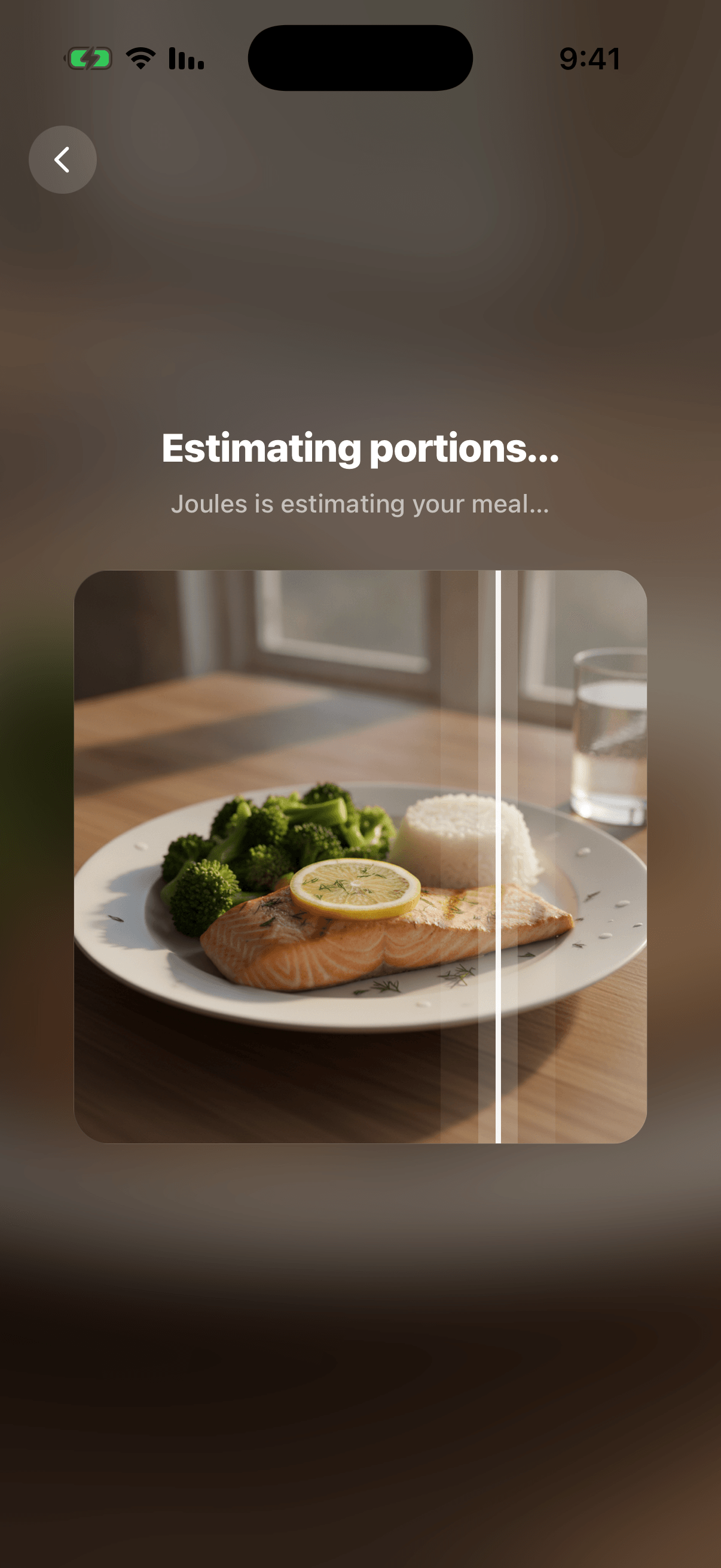
  • الذكاء الاصطناعي يقرأ طبقك من صورة ويملأ السعرات والماكروز
  • الأرقام مصدرها USDA FoodData Central، لا تخمينات المستخدمين
بلا ألاعيب الاشتراك المدفوع
  • مسح الباركود مجاني — غير محجوب خلف اشتراك
  • بلا إعلانات، أبدًا
تطبيق واحد هادئ، لا ثلاثة
  • تسجيل السعرات والماكروز مع درجة صحية يومية تشرح نفسها
  • مؤقّت صيام متقطّع وتتبّع للوزن مدمجان

الأسئلة الشائعة

How accurate is the Navy body fat method?

For most people it lands within 3–4 percentage points of a DEXA or underwater weighing result. Individual error can be larger, especially for very lean or very muscular bodies. Its real strength is consistency: measured the same way each month, it tracks change reliably even if the absolute number is a little off.

What is a healthy body fat percentage?

Using the ACE bands, 14–24% for men and 21–31% for women covers the fitness and average categories where most healthy adults sit. Athletes run lower, around 6–13% for men and 14–20% for women. Higher numbers are worth a conversation with a doctor, not a crash diet.

Why do women have higher body fat percentages than men?

Essential fat, the minimum needed for hormones, organs, and cell function, is about 2–5% in men and 10–13% in women. The difference supports reproductive health and is built into every category table. Comparing your number against the other sex's column tells you nothing useful.

Why does my smart scale show a different number?

Bioimpedance scales estimate body fat from an electrical signal that changes with hydration, recent meals, exercise, and even foot temperature. Day-to-day swings of 2–5 percentage points are common. The tape method is immune to those swings, which is why it often beats a scale for monthly tracking.

Can I reduce fat in just my waist?

No. Spot reduction does not hold up in research; your body draws on fat stores in a genetically set pattern. What works is an overall calorie deficit plus resistance training. The calorie deficit calculator sets the intake side of that up.

How fast can body fat percentage change?

A realistic pace is 0.5–1 percentage point per month during a steady, moderate deficit. Faster drops usually mean losing muscle along with fat. Remeasure every four weeks rather than weekly; the method cannot resolve smaller changes than that.

Do I need to lose weight to lower my body fat percentage?

Not always. New lifters and people returning after a break can add muscle and lose fat at the same weight, a process called recomposition. The scale stays flat while the waist measurement shrinks, which is exactly the change this calculator picks up.

Should I measure in inches or centimetres?

Either works; the calculator converts internally. What matters is using the same units, the same tape, and the same time of day every time you measure. First thing in the morning, before food, is the most repeatable.

حاسبات ذات صلة

ملاحظة حول الدقة: الحاسبات كهذه تقدم تقديرات مبنية على معادلات سكانية عامة — أما احتياجاتك الفعلية فتختلف بحسب الجينات والكتلة العضلية والحالات الصحية وغيرها. النتائج للاسترشاد فقط وليست نصيحة طبية ولا تشخيصًا ولا وصفة علاجية. استشر طبيبًا أو أخصائي تغذية معتمدًا قبل إجراء تغييرات كبيرة على غذائك أو تمارينك، خصوصًا إن كانت لديك حالة صحية، أو كنتِ حاملًا، أو كان عمرك أقل من 18 عامًا.