Joules app iconJoules

Protein Intake Calculator

How many grams of protein you need per day, from your body weight and what you are training for — with the target split into meals and translated into food.

Vienetai
Tikslas
Your daily protein target
139g/day

1.8 g per kg of body weight · Build muscle

Split across your meals

46 g each
3 meals
35 g each
4 meals
28 g each
5 meals

What 139 g looks like in food

FoodProteinYour whole day as this alone
Chicken breast (cooked)31 g per 100 g448 g
Eggs6 g each23.2 eggs
Canned tuna (drained)25 g per 100 g556 g
Greek yogurt (plain)10 g per 100 g1,390 g
Firm tofu14 g per 100 g993 g
Whey protein24 g per scoop5.8 scoops

Nobody eats one food all day — the last column is for scale, so the target feels concrete.

Track whether you actually hit this number — log meals in Joules and it counts protein automatically.

Atsisiųsti Joules

Why 0.8 g/kg is a floor, not a target

The official RDA for protein is 0.8 grams per kilogram of body weight per day. That number is widely misread. It was set as the minimum that prevents deficiency in nearly all sedentary adults — the amount below which you start losing body protein. It says nothing about what is optimal for someone who trains, diets, or is over 60.

For a sedentary 70 kg adult, 56 g a day genuinely is enough to stay healthy. Add lifting, running, a calorie deficit, or age, and the useful intake climbs well past it. That is why this calculator offers four targets instead of one.

What the evidence says for building muscle

The best single reference is a 2018 meta-analysis by Morton and colleagues in the British Journal of Sports Medicine: 49 trials, 1,863 participants. Extra protein stopped improving muscle gain at around 1.6 g/kg per day, with the confidence interval reaching about 2.2. That gives the working range you see repeated across sports nutrition — 1.6 to 2.2 g/kg — and this calculator's build-muscle setting of 1.8 sits in the middle of it.

Dieting changes the math. In a calorie deficit the body is readier to burn amino acids for fuel, so protein needs rise exactly when eating gets harder. Intakes around 2.2 g/kg help keep the weight you lose coming from fat rather than muscle, which is why the cutting option is the highest of the four. Pair it with a sensible deficit from the calorie deficit calculator, and let the macro calculator fill in carbs and fat around it.

Spreading it across the day

Total daily grams matter most. Distribution is the tiebreaker: muscle protein synthesis responds meal by meal, and each sitting maxes out its effect at roughly 0.3–0.4 g/kg — about 25–35 g for most people. Four meals of 35 g build slightly more muscle than one 140 g feast, even though the total matches.

Hence the per-meal split in the results above. A practical day at 140 g looks ordinary: eggs and yogurt in the morning, chicken and rice at lunch, a normal dinner, and something before bed. The food table exists because "140 grams" is abstract until you see it as four and a half chicken breasts or 23 eggs.

Plant and animal protein

Animal proteins contain all nine essential amino acids in the proportions muscle wants; most single plant sources run short on one — grains on lysine, legumes on methionine. Combining sources across the day fixes the profile without any careful pairing at each meal, and soy, tofu, and quinoa are complete on their own. If you eat fully plant-based and train hard, aim toward the top of your range and let bulk come from lentils, tofu, seitan, and a pea or soy powder when convenient. The difference is real but small, and total grams still decide most of the outcome.

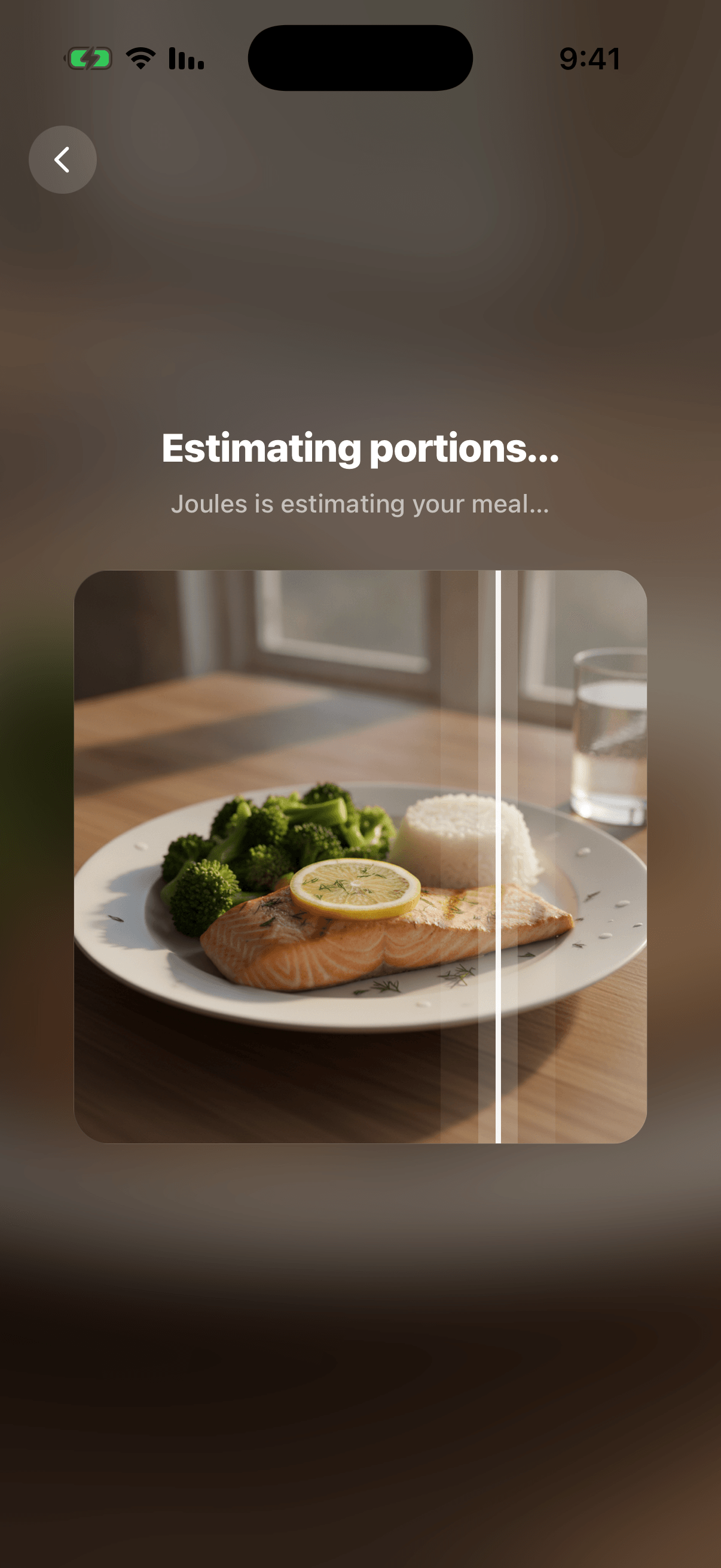
Joules AI food scan
Sekiklis, sukurtas būti tiksliausias

Viskas, ką daro MyFitnessPal, Cal AI ir Noom — vienoje ramioje programėlėje

Sukurta tikslumui
  • DI atpažįsta lėkštę iš nuotraukos ir užpildo kalorijas bei makroelementus
  • Skaičiai iš USDA FoodData Central, o ne iš vartotojų spėjimų
Jokių mokamos prieigos žaidimų
  • Brūkšninių kodų skenavimas nemokamas — neužrakintas už prenumeratos
  • Jokių reklamų, niekada
Viena rami programėlė, o ne trys
  • Kalorijų ir makroelementų registravimas su dienos sveikatos įvertinimu, kuris pats save paaiškina
  • Integruotas protarpinio badavimo laikmatis ir svorio stebėjimas

Dažniausiai užduodami klausimai

Is a high-protein diet bad for your kidneys?

For healthy kidneys, no. Trials up to and beyond 2.2 g/kg have not shown kidney damage in healthy adults, including a 2018 meta-analysis covering 28 studies. People with existing kidney disease are a different case: protein restriction is sometimes part of treatment, so follow your doctor's guidance there.

Should I use my current weight or my goal weight?

If you are near a healthy weight, use current weight. If you carry a lot of body fat, grams per kilogram of total weight overshoots, because fat tissue needs little protein. Using goal weight — or roughly your lean mass — gives a more sensible target in that case.

Can the body only absorb 30 g of protein per meal?

Your body absorbs essentially all of it — the myth confuses absorption with muscle building. What caps out per meal is the muscle-building response, around 0.4 g per kg per sitting for most people. Protein beyond that still gets used for other tissue and for energy. It is not wasted, just less efficient for muscle.

Do I need protein powder to hit my target?

No. Powder is a convenience, not a requirement — whey is nutritionally similar to the milk protein it came from. It earns a place when your target is high and your schedule is tight, since a scoop delivers about 24 g in ten seconds. Whole foods bring more satiety and micronutrients per gram.

Does protein timing around workouts matter?

Far less than total daily intake. The post-workout "anabolic window" turned out to be several hours wide, not 30 minutes. Hit your daily grams in 3–5 reasonable doses, one of them somewhere near training, and you have captured nearly all of the benefit.

Is plant protein as good as animal protein?

Slightly less efficient per gram, and easily fixed. Most single plant sources run low on one essential amino acid, and plant proteins digest a little less completely. Eating varied sources across the day and aiming at the top of your range closes the gap — recent trials in trained lifters found similar muscle growth once total protein was matched.

Do older adults need more protein?

Yes. Muscle responds less sensitively to protein with age, so the same dose builds less. Research groups focused on aging recommend 1.0–1.2 g/kg for healthy older adults, and more like 1.2–1.6 when training or recovering from illness — noticeably above the 0.8 RDA.

Susijusios skaičiuoklės

Pastaba dėl tikslumo: tokios skaičiuoklės pateikia apytikslius įverčius pagal populiacijos lygmens formules — tikrieji jūsų poreikiai priklauso nuo genetikos, raumenų masės, sveikatos būklės ir kitų veiksnių. Rezultatai skirti tik susipažinti ir nėra medicininė konsultacija, diagnozė ar gydymo paskyrimas. Prieš reikšmingai keisdami mitybą ar fizinį aktyvumą pasitarkite su gydytoju arba dietologu, ypač jei turite sveikatos sutrikimų, esate nėščia arba jums mažiau nei 18 metų.