Joules app iconJoules

Ideal Weight Calculator

See your ideal body weight by the four standard formulas, why they disagree with each other, and how the numbers compare with the healthy BMI range.

Единицы
Пол
Ideal weight range across four formulas
70.4–75.2kg

For comparison, a BMI of 18.5–24.9 at your height is 58.6–78.9 kg — a much wider band.

73.2 kg
Devine (1974)
71.1 kg
Robinson (1983)
70.4 kg
Miller (1983)
75.2 kg
Hamwi (1964)

Whatever target you settle on, Joules converts it into a daily calorie budget and tracks your weight trend toward it.

Скачать Joules

Where these formulas actually come from

None of the four was designed to tell you what you should weigh. Dr. B.J. Devine published his formula in 1974 so hospital pharmacists could dose drugs like gentamicin, which distribute through lean tissue rather than fat. He needed a quick estimate of lean body size from height, and by his own account picked the constants from earlier rules of thumb rather than from measured data.

The Hamwi rule is older still: G.J. Hamwi published it in a 1964 American Diabetes Association handbook as bedside shorthand for setting diet plans. Robinson and Miller each published corrections to Devine in 1983 after checking his numbers against insurance height-and-weight tables and finding them off at the extremes, Robinson adjusting down for tall men, Miller flattening the slope further.

So the honest summary is: one dosing tool, one diabetes-clinic shorthand, and two corrections to the dosing tool. Useful history, thin evidence for setting a personal goal. Worth keeping in mind before treating any of the outputs as a verdict on your body.

The four formulas

FormulaMenWomen
Devine (1974)50 kg + 2.3 kg per inch over 5 ft45.5 kg + 2.3 kg per inch over 5 ft
Robinson (1983)52 kg + 1.9 kg per inch over 5 ft49 kg + 1.7 kg per inch over 5 ft
Miller (1983)56.2 kg + 1.41 kg per inch over 5 ft53.1 kg + 1.36 kg per inch over 5 ft
Hamwi (1964)48 kg + 2.7 kg per inch over 5 ft45.5 kg + 2.2 kg per inch over 5 ft

Why the numbers disagree

Each author picked a different starting weight at 5 ft and a different amount per inch, so the formulas fan out as height rises. For a 5'10" man the spread runs from 70.3 kg (Miller) to 75 kg (Hamwi), about 10 lb of disagreement. For a 5'4" woman it runs from 54.3 to 58.5 kg. There is no experiment that settles which is right, because they were never measuring the same thing.

Compare that with the range built from the BMI evidence. At 5'10", a BMI of 18.5–24.9 covers roughly 58.5 to 78.7 kg. All four ideal-weight results sit comfortably inside it, which tells you something useful: the formulas are four arbitrary points within a wide healthy band, not four attempts at one true number.

What to do with the number

Treat the output as a landmark, not a destination. If your weight is far above or below all four estimates, that is worth noticing, in the same way an unusual BMI is worth noticing. If you sit within a few kilograms of them, the formulas have nothing more to tell you.

A goal weight you can actually hold matters more than a formula-perfect one. Pick a number inside the healthy BMI band that fits your build and training history, then work out the calories that get you there: the TDEE calculator finds your maintenance level, and a 250–500 calorie daily adjustment moves you roughly 0.25–0.5 kg per week. People who carry a lot of muscle should lean on a body fat estimate instead; for them, height-only formulas miss the most important variable entirely.

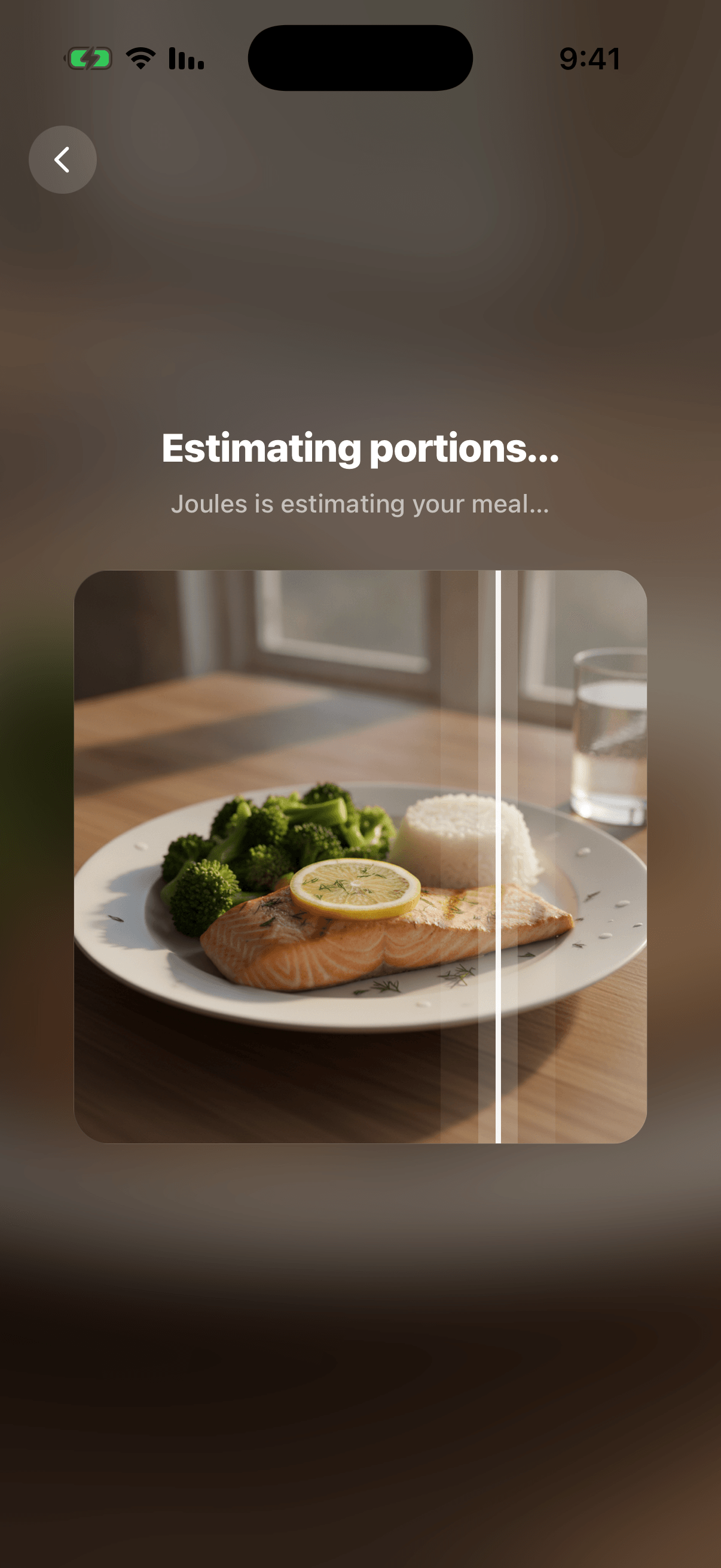
Joules AI food scan
Трекер, созданный быть самым точным

Всё, что умеют MyFitnessPal, Cal AI и Noom — в одном спокойном приложении

Создано для точности
  • ИИ распознаёт блюдо по фото и заполняет калории и БЖУ
  • Цифры — из USDA FoodData Central, а не из догадок пользователей
Без игр с платным доступом
  • Сканирование штрихкодов бесплатно — не спрятано за подпиской
  • Никакой рекламы, никогда
Одно спокойное приложение, а не три
  • Учёт калорий и БЖУ с ежедневной оценкой здоровья, которая объясняет сама себя
  • Встроенные таймер интервального голодания и контроль веса

Частые вопросы

Which ideal weight formula is most accurate?

None of them was validated against health outcomes, so "accurate" is the wrong frame. Devine is the most used because hospitals adopted it for drug dosing. If you want a health-based reference, the BMI range of 18.5–24.9 for your height rests on far more evidence than any of the four formulas. Our BMI calculator shows that range directly.

Why do the four formulas give different numbers?

Each one starts from a different base weight at 5 ft and adds a different amount per inch of height, between 1.36 and 2.7 kg. The authors chose those constants for convenience in clinical work, not from a shared dataset, so the estimates drift apart as height increases.

Is my ideal weight the weight I should aim for?

Not necessarily. The formulas produce a single point, but healthy weights for any height span a range of 20 kg or more. A sensible target sits inside the healthy BMI band, feels sustainable, and accounts for how much muscle you carry. For many people that lands above the formula output.

Why does the calculator not ask for my age?

Because the formulas do not use it. They were written as quick height-based rules for dosing and clinical shorthand. Age does matter for interpretation: research in adults over 65 links slightly higher weights with better outcomes, another reason to read these numbers loosely.

Do these formulas work if I am shorter than 5 ft?

No. All four are written as a base weight at 5 ft plus an amount per inch above it. Below 152 cm they stop scaling and return the base value, which is not meaningful. The healthy BMI range works at any adult height and is the better reference there.

Do the formulas account for muscle?

No. They only see height and sex. A lean, muscular person can weigh 10–15 kg more than the formula output with low body fat. If that describes you, the body fat calculator tells you far more than an ideal weight ever will.

How do I actually reach a target weight?

Pick a target inside the healthy range, find your maintenance calories with the TDEE calculator, then eat 250–500 calories above or below them depending on direction. The calorie deficit calculator turns a weekly rate into a daily number.

Похожие калькуляторы

О точности: подобные калькуляторы дают оценку по усреднённым формулам — реальные потребности зависят от генетики, мышечной массы, состояния здоровья и многого другого. Результаты носят справочный характер и не являются медицинской рекомендацией, диагнозом или назначением. Прежде чем существенно менять питание или тренировки, посоветуйтесь с врачом или диетологом — особенно если у вас есть заболевания, вы беременны или вам меньше 18 лет.